When to start preparing
The golden window for preparation is the second trimester — weeks 14 to 27. Energy has returned, the bump is manageable, and you still have months of runway. The hospital bag can wait until weeks 34–36; the nursery and big-ticket gear are best bought in the second trimester to spread costs across paychecks; consumables like diapers and wipes should wait until the last month, because sizes change fast and storage is wasted space.
The single best organizing move is a written checklist before any purchase. Without one, excitement converts straight into impulse buys; with one, every shopping trip answers to a plan. Our Newborn Checklist provides 50 items across six categories with saved progress, so the plan lives in your pocket and updates as you tick.
Start with the essentials and let the 'nice-to-haves' earn their way onto the list only after the essentials are done — that single habit saves families hundreds without sacrificing anything that matters.
The six essential categories
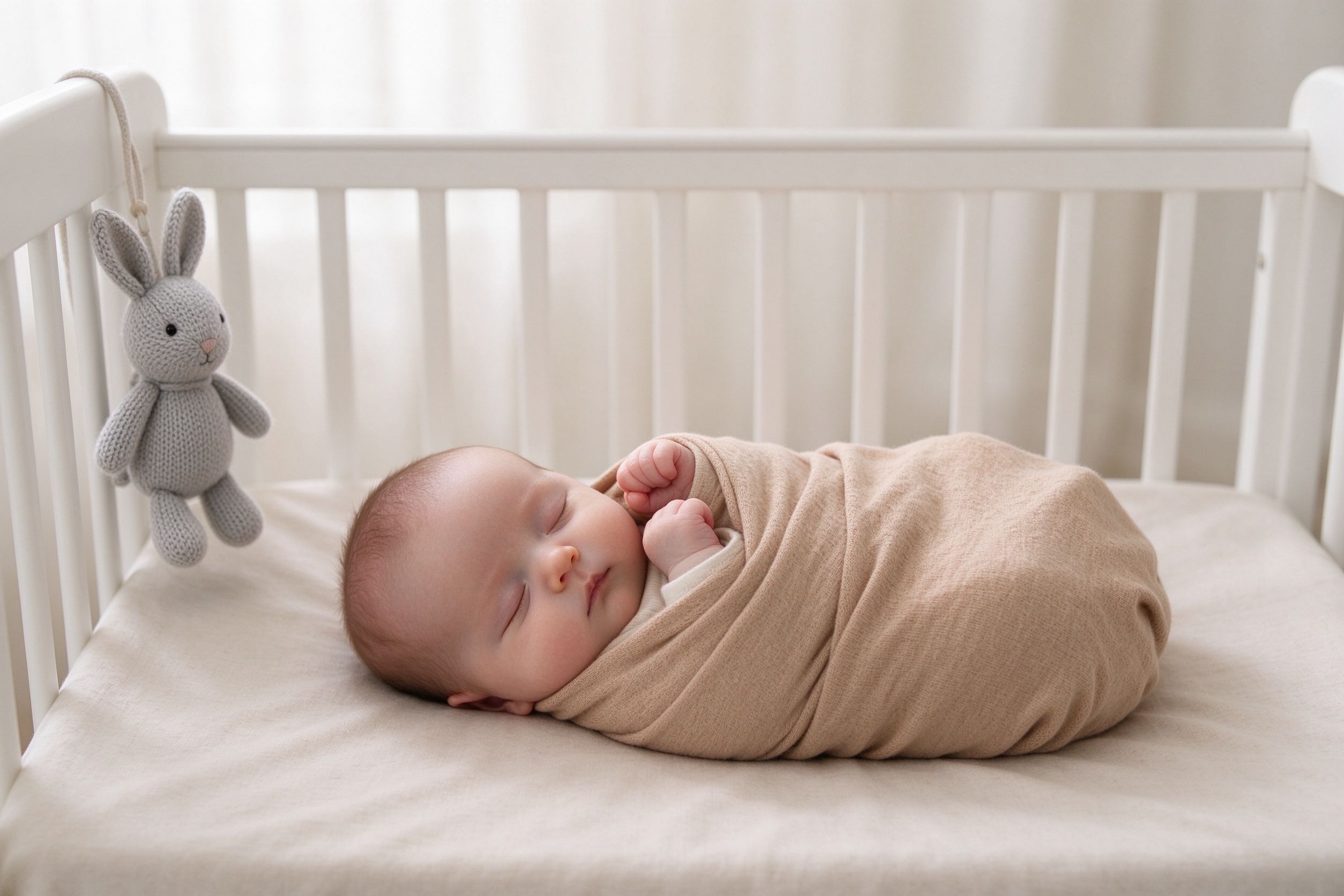
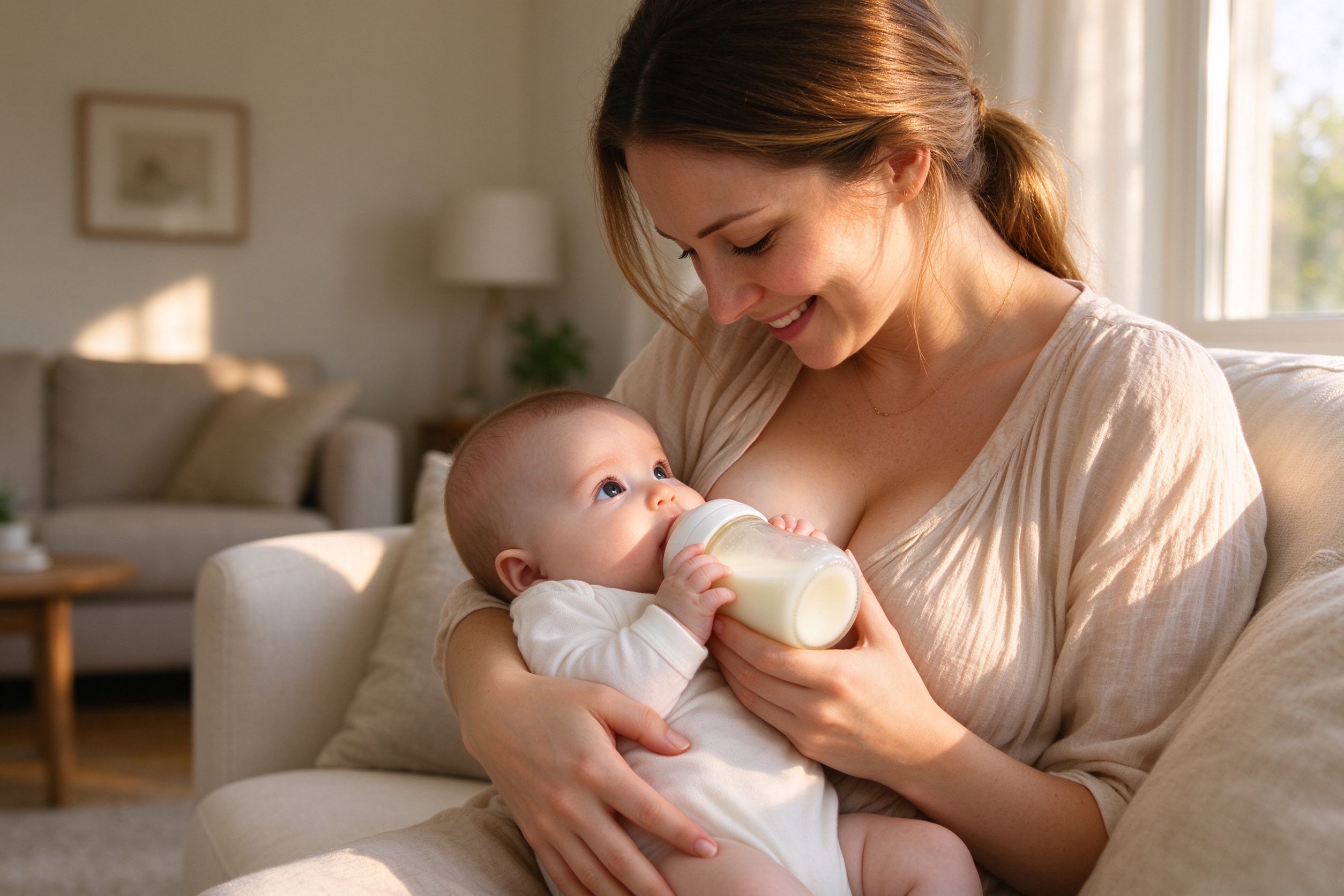
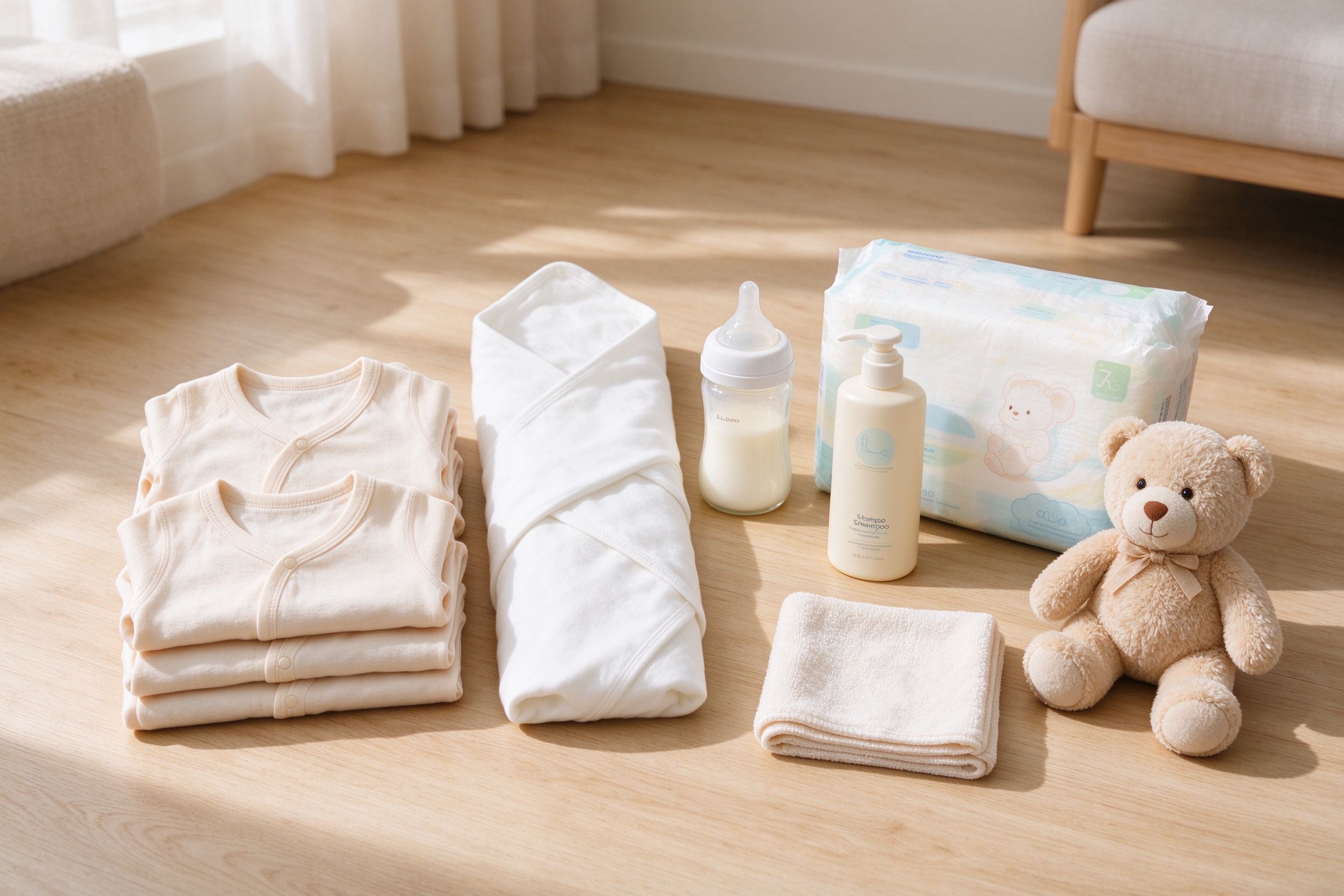
Our checklist organizes 50 essentials into six buckets. Feeding: bottles, a bottle brush, breast pump accessories if pumping, and formula if formula-feeding. Diapering & bath: a diaper stock in several sizes, wipes, a tub, washcloths, gentle soap, diaper cream. Sleep & nursery: a firm crib or bassinet with a tight sheet, sleep sacks instead of blankets, a changing station, a dresser.
Clothing: six to eight bodysuits and sleepers in newborn and 0–3 months, socks and mittens, two swaddles. Gear & safety: a car seat (installed before the hospital trip), a stroller or carrier, a thermometer, a nail trimmer. Hospital bag: your documents, chargers, toiletries, two outfits for baby, and snacks — many parents forget the snacks.
The checklist is deliberately lean. Every item on it earns its place through daily use in the first month — if an item is used fewer than five times in the first four weeks, it was probably not essential.
What NOT to buy (the money you'll save)
The anti-checklist is as valuable as the checklist. Skip newborn shoes entirely — babies cannot walk and their feet need freedom. Skip crib bumpers, loose blankets, pillows and sleep positioners — they are not only unnecessary, they are against safe-sleep recommendations. Skip 'newborn' sizes in bulk: most babies leave them behind within weeks, and hand-me-downs are perfect here.
Skip most '0–3 month' clothing piles — six to eight pieces cycle through a rotation that keeps growing babies dressed without a closet overhaul. Skip newborn-specific gadgets with a single narrow purpose, from bottle warmers (a mug of hot water works) to wipe warmers (plain wipes at room temperature are fine).
The rule of thumb that beats all advice: buy for the baby who exists in a month, not the fantasy baby in the catalog. That discipline alone typically trims 20–30% off first-year spending with zero loss of comfort or safety.
The first-year budget, realistically
First-year costs split into consumables (diapers, wipes, formula, clothing) and one-time gear (crib, stroller, car seat, nursery furniture). Our Baby Budget Calculator starts from a regional preset and spreads big-ticket purchases across the year as monthly allocations, so the total reads like a real budget rather than a sticker shock.
The honest numbers for a mid-range plan: diapers and wipes run roughly $60–90 per month early, easing as the count drops; formula adds $60–150 per month depending on brand; clothing can be near-zero if you accept hand-me-downs, or $30–80 per month if you buy new. The one-time gear block — crib, car seat, stroller, furniture — commonly totals $500–1,500 for mid-range choices.
The single most underappreciated line is the extras: toys, books, photos, outings. Families routinely double their 'planned' first-year spend through this bucket alone, which is why our calculator tracks it separately.
Smart saving strategies that cost nothing
Three strategies cut costs without cutting quality. First, the hand-me-down pipeline: register your interest with friends and family six months early; most parents are delighted to pass on barely-used gear, and safety items (car seats, cribs) should be new or from trusted, undamaged sources. Second, buy gear off-cycle: strollers and cribs drop sharply in price after holiday seasons, and 'last year's model' is often 30–50% cheaper with identical safety ratings.
Third, the cloth-disposable hybrid: even two or three cloth diaper changes a day cuts disposable spending meaningfully without committing to full-time cloth. Add a modest monthly cap on 'extras' — say, one toy or book per week — and the budget stays honest by construction.
None of these strategies trades safety or comfort. They trade timing, sourcing and a little discipline — and they are exactly the difference between a first year that feels affordable and one that feels like a second mortgage.Finally, the number that reframes everything: your first year is really two different budgets. The first three months are heavy on one-time setup and consumables; months four to twelve shift toward ongoing supplies, growth in clothing sizes and feeding costs. Families who separate the two phases in their planning rarely feel overwhelmed, because each phase has a manageable number. Our checklist and budget tool work best when you run them once for the nursery phase and once for the months ahead.