Why old wives' tales survive
Every culture has a shelf of pregnancy folklore: the tales are older than ultrasound, older than DNA tests, older than the words 'evidence-based'. They survived not because they are true — most aren't — but because pregnancy is the longest suspense story most people ever live, and suspense demands games. A tale gives grandparents a role, gives a waiting family something to argue about, and turns nine months of waiting into conversation.
There is real value in that. Folklore is community technology: it connects generations and creates shared ritual in the exact period when families come together. The science is not the enemy of the tradition — the two can coexist, if the folklore is treated as entertainment and the science as information.
That is the spirit of our Old Wives' Tales Quiz: it scores the folklore honestly, tells you when a tale has no basis, and points you to the real methods when certainty actually matters. Enjoy the game; respect the science.
The tales, fact-checked
Fetal heart rate: the tale says fast heartbeats mean a girl, slow mean a boy. The data says the average fetal heart rate hovers in a similar range for both sexes; any difference is far too small to predict anything. Heart rate varies with activity, gestational age and position — not chromosomes. Verdict: folklore only.
Cravings: sweet cravings mean a girl, sour or salty mean a boy — and 'carrying low means boy, high means girl'. Cravings are driven by hormonal shifts and sometimes nutrient needs; no study links them to sex. Carrying position depends on your muscle tone, baby position and your own anatomy. Both: folklore only.
Skin and hair: 'the baby steals beauty from the mother' if it's a girl; acne and dull hair mean a girl, glowing skin means a boy. Hormone changes can genuinely affect skin and hair — but the direction is individual, not sex-linked. Verdict: folklore only, with a kernel of real hormones inside.
The ring test: hang a ring (or needle) over the belly — swinging in circles means boy, back-and-forth means girl. The ring swings because of tiny hand tremors amplified by the string; the pattern follows the holder's subconscious, not the fetus. Verdict: folklore only — but it is a lovely party game.
The morning sickness tale ('less sickness means a boy') has the most interesting data: higher hCG levels, linked to more nausea, are statistically more common with girls. The effect is real but weak — useful for fun, useless for certainty.
The one tale with a grain of truth
Almost every tale fails, but two deserve a kinder verdict. First, morning sickness and girls: large studies find pregnancies with severe nausea (hyperemesis) are slightly more likely to be girls, because hCG — which drives nausea — runs higher with female fetuses. The correlation is genuine but small; it shifts odds a few percentage points, nothing more.
Second, the old line about craving salt — sodium appetite — actually has a physiological echo: some pregnant women need more sodium as blood volume expands, and real deficiencies can be signaled by cravings. But craving pickles does not mean a boy; it may just mean your body is asking for salt.
The lesson for parents: a tale with a 'kernel of truth' still cannot tell you the sex. If a mild statistical tilt were a reliable oracle, every girl would have a nauseated mother — and the maternity ward would be half-empty.
When certainty matters, use real methods
All folklore answers one question — is it a boy or a girl? — and all of it fails at that job. The real options, by timing: a non-invasive prenatal test (NIPT) can detect fetal sex from maternal blood from around 10 weeks, with very high accuracy, as a by-product of its main screening purpose; an anatomy ultrasound around 18–22 weeks gives a visual answer when the baby cooperates; and if you want zero uncertainty, genetic testing after birth settles it forever.
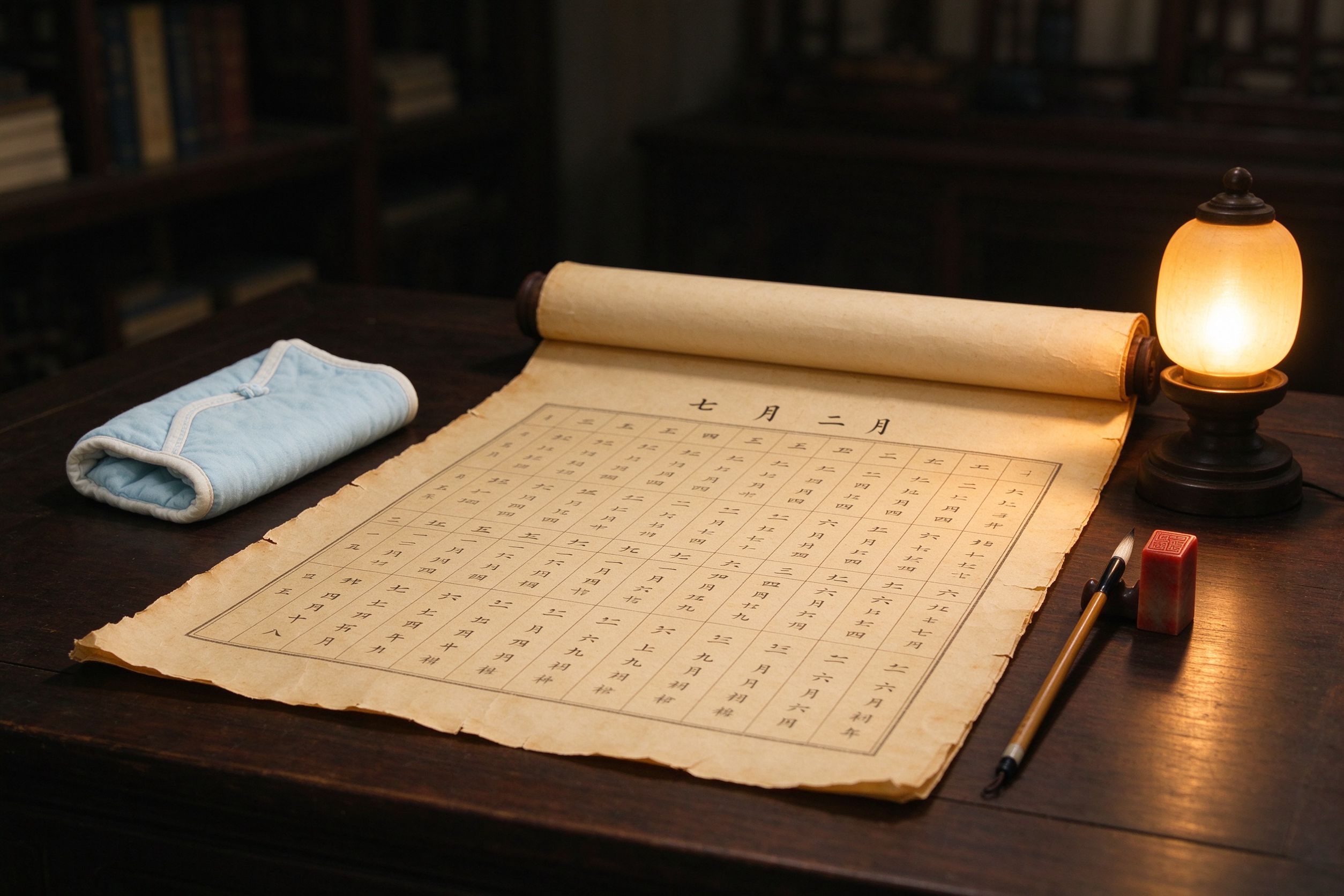
Our Chinese Gender Chart and Zodiac calculator sit in the same honest category as the tales: fun, traditional, not diagnostic. We say this on every page, and we mean it.
The practical suggestion: run the folklore gauntlet for the party, mark the predictions in the baby book, and let the ultrasound or NIPT deliver the real announcement. That way tradition gets its ritual, the family gets its game, and the parents get their truth.
A family ritual worth keeping
The most sustainable way to enjoy folklore is to institutionalize it. Write the predictions — heart rate, cravings, belly shape, ring swing, the chart, the quiz — into a single 'predictions page' in the pregnancy journal. Add the actual answers when they arrive: the baby's sex, birth weight, hair color, eye color. Years later, the page becomes one of the funniest, warmest pages in the baby book.
This is exactly what our tools are built for: the Old Wives' Tales Quiz scores ten tales, the Chinese Gender Chart adds the traditional angle, and the pregnancy-week tracker keeps the calendar straight while you play.
The tradition survives best when it is honest: a family that laughs together at a false prediction is closer than a family that treated it as prophecy. Keep the game in the game, and the science in the science — then watch both do their separate, wonderful jobs.