What newborn sleep is really like
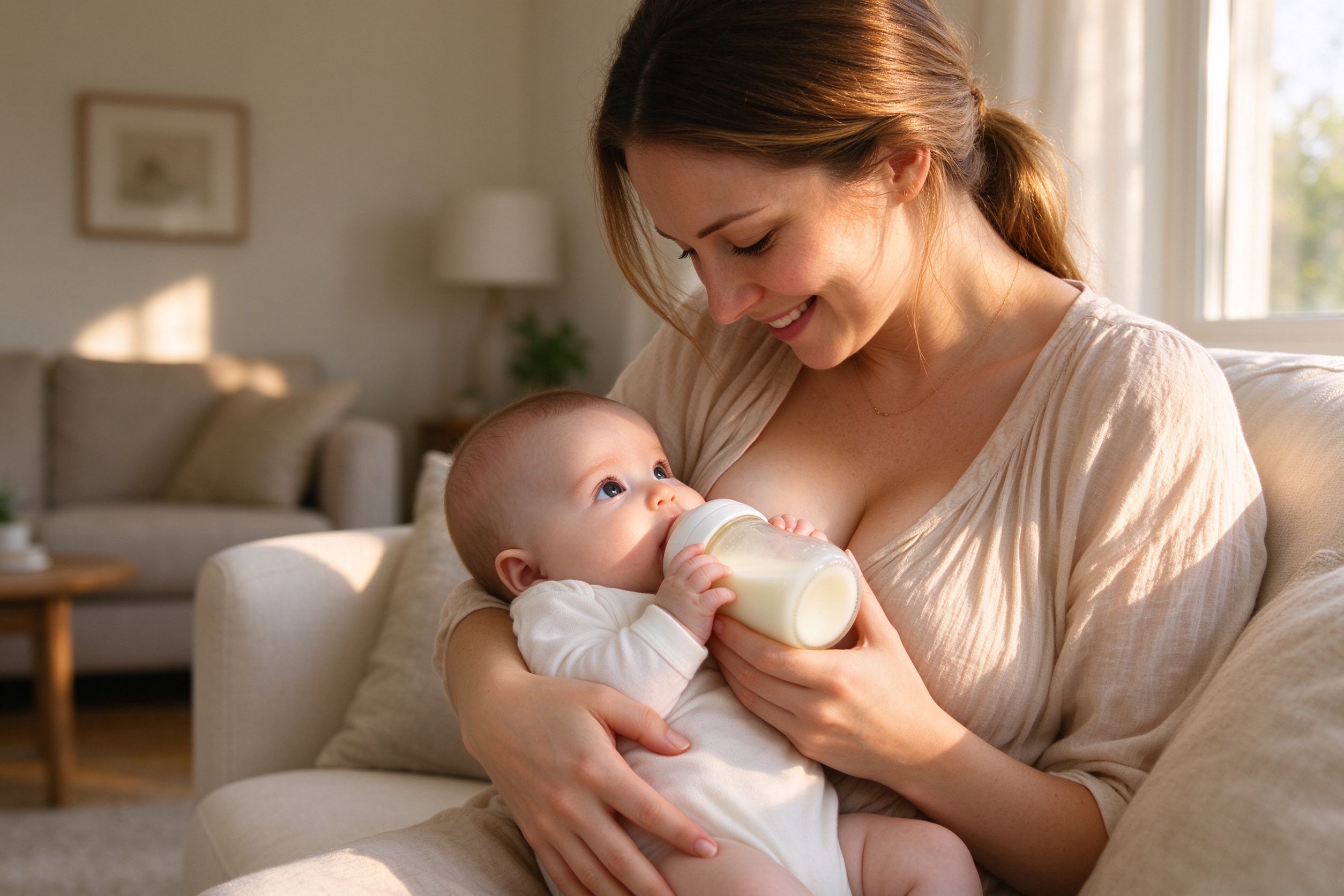
Newborns sleep a lot — 14 to 17 hours per 24-hour day — but in short, evenly-spaced chunks of 45 minutes to 3 hours, waking day and night for feeds. They have not yet developed a day-night rhythm; that circadian clock starts to consolidate around 6–8 weeks, when longer night stretches begin to appear. Most parents' first lesson in humility is that 'sleeping like a baby' means waking every 2–3 hours.
Total sleep at this stage matters far more than when it happens. The newborn phase is not the moment for sleep training or rigid schedules — it is the moment for feeding on cue, protecting safe sleep, and taking shifts with your partner so someone gets a stretch.
Our Baby Sleep Calculator reflects this reality: for young babies it estimates a bedtime from wake windows rather than pretending a 7 p.m. target is realistic in the early weeks.
Wake windows: the practical clock
A wake window is the time a baby can comfortably stay awake between sleeps. Miss it and the baby gets overtired — paradoxically sleeping worse. Typical windows: newborn, 45–60 minutes; 1–2 months, 60–90; 3–4 months, 90–120; 5–6 months, 2–2.5 hours; 7–9 months, 2.5–3; 10–12 months, 3–3.5. These are ranges, not laws — some babies run shorter or longer, and any window can stretch for a special occasion.
The skill parents actually need is reading sleepy cues before the meltdown: eye rubbing, ear pulling, a glassy stare, fussiness that only nursing or motion can calm. Catching the window's early edge makes bedtime dramatically easier than rescuing an overtired baby.
Our calculator takes age (or birth date) and a desired morning wake time, applies the typical window, and works backward to suggest nap times and a bedtime. Treat the output as a gentle compass, not a military schedule.
Safe sleep: the non-negotiables
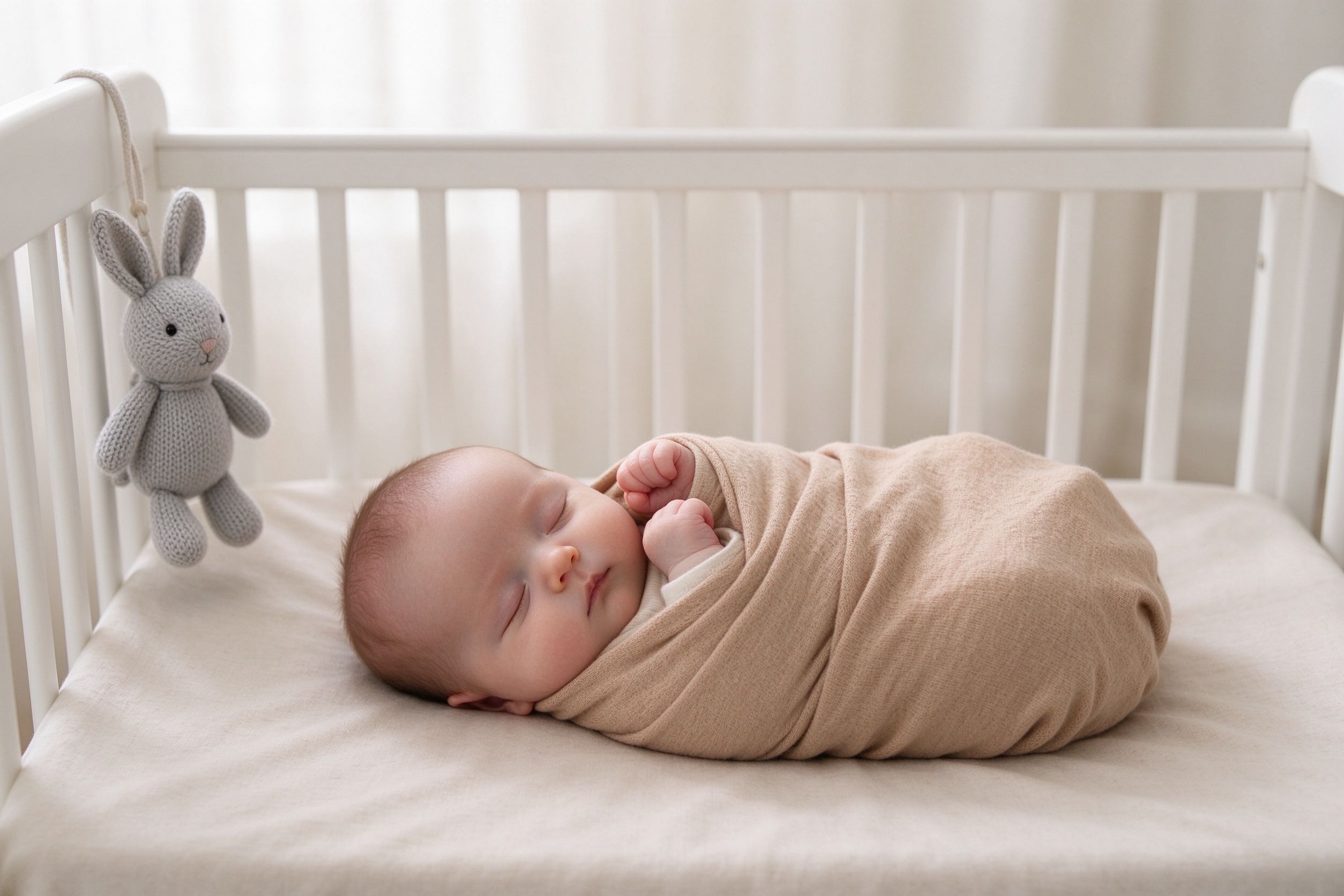
The ABCs of safe infant sleep are not negotiable: Alone, on the Back, in a Crib (or bassinet or pack-n-play) — every sleep, day and night, for the first year. That means a firm mattress with a tight-fitting sheet, no pillows, no blankets, no bumpers, no stuffed animals, and no positioners in the sleep space. Room-sharing (same room, separate surface) is recommended for at least the first 6 months, ideally the first year.
The evidence behind these rules is the single most consistent finding in pediatric sleep research: since the Back-to-Sleep campaigns, SIDS rates have dropped by more than half in countries that adopted them. That is why no 'cozy crib setup' photo, however beautiful, gets to override the rules.
Temperature check: keep the room around 20–22°C, dress the baby in one layer more than an adult would wear comfortably, and check the back of the neck — warm and dry is the goal, sweaty means too much. A baby who feels cool on the hands but warm at the nape is dressed correctly.
Sleep regressions: real, temporary, normal
Around 4 months — and again near 8–10 months and around 12–18 months — many babies suddenly sleep worse for a couple of weeks. The 4-month regression is the big one: sleep begins to cycle in adult-like patterns with lighter phases between deeper ones, so the baby wakes more between cycles and needs the same conditions to link them.
Regressions are developmental, not a parenting failure. They typically pass in 2–6 weeks, and the healthiest response is consistency: keep the same bedtime, the same sleep space, and the same soothing method, avoid creating new dependencies (like suddenly rocking every wake), and adjust wake windows slightly if the baby is clearly undertired or overtired.
The encouraging frame: a regression usually arrives alongside a milestone — rolling, crawling, language explosion — because the developing brain is too busy to sleep 'normally'. The bad phase is the price of the leap, and it ends.
Building a gentle, realistic routine
Routines work because they are predictable, not because they are perfect. A simple pre-sleep sequence — bath or wipe-down, pajamas, dim lights, feed, cuddle, and the same quiet phrase — repeated in the same order each night helps a baby's brain pattern-match 'this is sleep time' from about 2–3 months on.
Two habits that quietly save sleep: first, put the baby down drowsy-but-awake whenever possible, so they learn to fall asleep without being dependent on your presence every time they surface between cycles. Second, keep mornings and daytime bright and active and evenings dim and quiet, which strengthens the circadian rhythm doing the real work.
And the meta-habit: protect your own sleep. Sleep-deprived parenting is a public health issue in miniature — take shifts, accept help, and remember that a baby who cries for a few minutes while a parent regroups is not a crisis. The sleep you model is part of the family's wellbeing.The most common parent question about windows is simple: what if the baby will not sleep at the suggested time? Then the window was wrong for this day. A sick day, a missed nap, a new milestone or a teething night each shift what typical means. When the schedule fails, drop back to the cues: watch the sleepy signs, shorten or extend the last window by fifteen minutes, and treat tomorrow as a fresh try. Rigidity breaks routines; responsiveness builds them.